
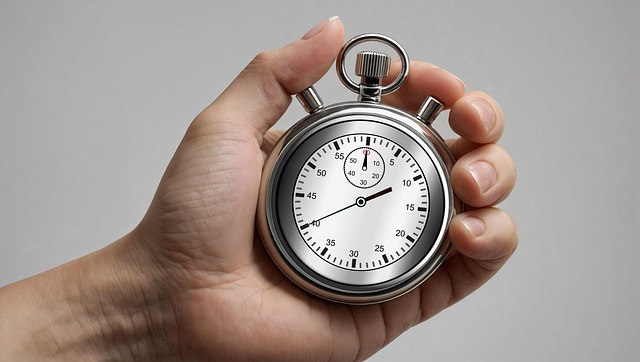
Tracking Triathlon Progress: More Than Just the Stopwatch
If you were to visit the home of Mercedes-Benz in Weybridge, Surrey, you’d be forgiven for missing a quote on the wall from Mercedes Formula 1 Team Principal Toto Wolff. After all, there’s enough technology, mind-boggling numbers and fascinating displays to not spend too long dedicating your time to a quote etched on the wall as you pass from one display to another. That is unless, like me, you make a living from helping people who measure themselves against the topic it is referring to. Then, like me, you might stop for a moment. You might, like me, even take your phone out and take a picture of that quote for future consideration.
Racing is the only true test – Toto Wolff
For the triathlete, this sentiment resonates deeply. The race is our laboratory, the finish line our final grade. It’s where months of sacrifice are distilled into a single, unassailable number. Tracking triathlon progress simply by the stop watch watch is simplistic.
Yet, any seasoned triathlete knows the unique frustration of this “Only true test.” Comparing one race to another is a fool’s errand. Was your slower half-Ironman time a result of flawed training, or was it the 20-mph headwind on the bike leg that shattered your legs before the run even began? Did the swim feel sluggish because of a fitness drop, or was it the choppy, washing-machine chaos of a mass start? In triathlon, the variables are infinite, and the race result, while absolute, can be a cryptic and misleading report card.
The solution lies not in discarding the race as a metric, but in building a more robust, nuanced understanding of progress. The true key to unlocking your potential is a disciplined, intelligent approach to tracking your training. It’s the daily data that reveals the why behind the race-day what.
The Deceit of Race Day and the Clarity of Consistent Data
An unexpected race result, whether positive or negative, can send an athlete spiralling. A great performance might lead to the reinforcement of flawed training; a poor one to the abandonment of what was actually working. This is where training metrics cut through the noise.
By tracking performance in a structured way, you move from guessing to knowing. You can identify trends that a single race day obscures. Is your Functional Threshold Power (FTP) on the bike consistently creeping up? Is your running heart rate at a given pace steadily dropping? These are unambiguous signals of progress. Conversely, a plateau or regression in your training data provides an early warning system, allowing you to pivot before you toed the start line. It reduces the confusion and provides the key insight into what is working, and what isn’t.
The Pivotal Role of Maximal and Sub-Maximal Testing
To track triathlon progress, you must first establish a baseline. This is where testing becomes non-negotiable. The most effective approach uses a combination of maximal and sub-maximal tests across all three disciplines.
Maximal Tests: Finding Your Ceiling
A maximal test, like a 20-minute FTP test on the bike or a critical power swim test, is designed to find the upper limit of your current ability. These are frequently used for establishing key training zones. They are brutally honest and provide a clear, powerful number to benchmark against: be it 250 watts, a 1:30 per 100m swim pace, or a specific running velocity.
However, maximal tests are demanding. They require full recovery, immense mental fortitude, and can be difficult to execute perfectly outside a controlled environment. Their very intensity means you can’t, and shouldn’t, perform them weekly.
Sub-Maximal Tests: The Unsung Hero of Durability
This is where sub-maximal testing reveals its profound value. Imagine a test where you run 10 kilometres at a predetermined, moderate pace and heart rate—say, 5:00 min/km at 140 BPM. You track your time, heart rate, and perceived exertion. A month later, you repeat the test under identical conditions. If you now run the same 10 kilometres at the same 140 BPM, but your pace has improved to 4:50 min/km, you have a clear, objective measure of improved efficiency. Your cardiovascular system is doing the same work, but it’s producing more speed.
Sub-maximal tests are less taxing, can be performed more frequently, and are exceptional indicators of aerobic development and durability. They tell you not just how fast you can go, but how economically you can move at your everyday training intensities.
The Inevitable Limitation: We Don’t Train in a Lab
All testing, however, comes with a critical caveat: the “Observation Effect.” The very act of measuring can alter the outcome. We do not train or race in a sterile lab environment. I recall my time in an exercise physiology lab, where we would meticulously control the room temperature, humidity, and even the time of day for tests. Athletes would arrive fasted, having done no exercise for 48 hours. The data was pristine, but it was also an artificial snapshot.
Your reality is different. Your Tuesday bike test might be after a poor night’s sleep. Your Thursday run test could be in 90-degree humidity. The data you collect is “noisy.” This is not a reason to abandon testing; it is a reason to contextualize it. The trend over time is what matters, not any single data point. Was this test an outlier, or part of a pattern? By logging subjective metrics like sleep quality, muscle soreness, and stress levels alongside your power and pace, you begin to filter out the noise and listen to the true signal of your fitness.
There should be little doubt that tracking triathlon progress with both maximal and sub-maximal tests is a potentially powerful tool. But as with any tool, it requires a skilled and mindful craftsman. It’s not about becoming a slave to the data, but about using it to build a more resilient, capable, and race-ready athlete. Because when you finally step to the start line, the one true test will be far less daunting when you know, with certainty, that you have already passed all the ones that came before it.
If you need some help with tracking triathlon progress, why not reach out and contact us!